Preparing your La Crescenta home for wildfire season: fire damage prevention tips
A practical, local guide to preparing your La Crescenta home for wildfire season - defensible space zones, ember-proofing, evacuation prep, and the mistakes that cost homeowners the most.
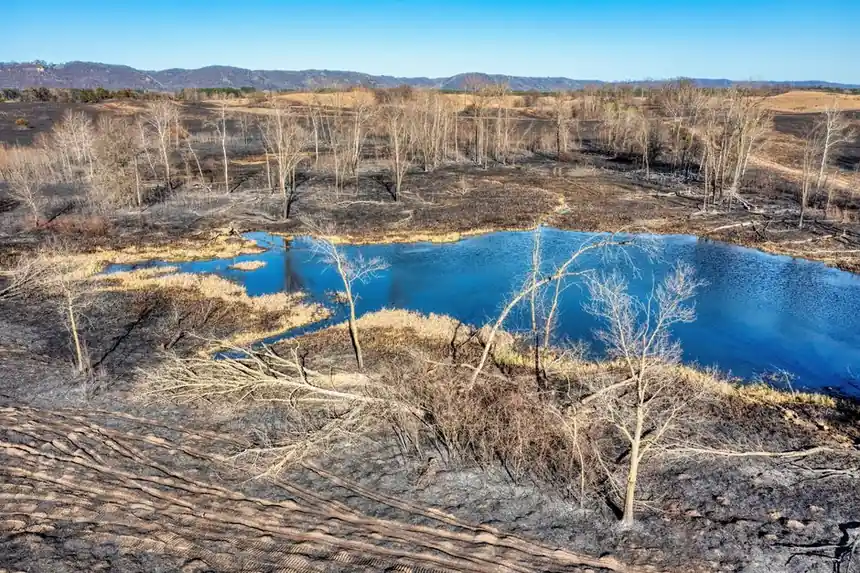
Wildfire season in La Crescenta runs from late spring through October, with the highest risk in September and October when Santa Ana winds meet dry chaparral. Preparing your La Crescenta home for wildfire season California means creating defensible space, hardening your house against embers, and having an evacuation plan you can execute in under five minutes.
This guide walks through each of those steps with local specifics - the 100-foot zone rules, the vent types that fail in wind-driven fires, and the mistakes we see most often when we're called out after a close call.
When is wildfire season in La Crescenta, California?
Wildfire season in La Crescenta, California peaks from August through November, but the risk window now stretches from May through December in dry years. The Angeles National Forest sits directly above the valley, and the San Gabriel Mountains funnel hot, dry winds down through the canyons - the same topography that makes this area beautiful also makes it a chimney for fire.
Cal Fire's 2026 fire hazard severity maps classify most of La Crescenta as Very High Fire Hazard Severity Zone. That designation isn't just a label; it triggers real requirements for defensible space inspections and, for some properties, disclosure obligations when you sell.
Three local factors drive the season here:
- Santa Ana winds - typically October through December, with gusts over 60 mph in the foothills.
- Fuel moisture - chaparral above Foothill Boulevard dries out by June most years.
- Access - narrow canyon roads like Rosemont and Briggs Terrace can be cut off early in a fast-moving fire.
If you live in La Crescenta Valley Fire Damage Restoration territory, you already know the wind patterns. The preparation work is the same whether you're on the valley floor or up a canyon road.
What is defensible space in La Crescenta, California?
Defensible space in La Crescenta, California is the buffer you create between your house and the grass, brush, trees, and flammable materials around it - divided into three zones that extend 100 feet out from the structure. California law (PRC 4291) requires 100 feet of defensible space for most properties in high fire hazard zones.
The zones break down like this:
- Zone 0 (0-5 feet): The ember-resistant zone. No wood mulch, no plants under the eaves, no firewood stacked against the wall. This is the zone that catches embers and ignites.
- Zone 1 (5-30 feet): Lean, clean, and green. Remove dead vegetation, keep grass under 4 inches, space shrubs at least 10 feet apart, and prune tree limbs up to 6 feet off the ground.
- Zone 2 (30-100 feet): Reduced fuel. Thin trees to 10-foot spacing between crowns, remove ladder fuels that carry fire from ground to canopy.
Most La Crescenta lots are smaller than 100 feet deep, which means your defensible space often ends at your property line. That's fine - the goal is reducing the fuel immediately around the structure, not clearing the whole hillside.
One local wrinkle: many properties here back up to Angeles National Forest or county land. You can't clear beyond your line, but you can document the fuel load and report it to the county for abatement. We've seen fires stop at a well-maintained property line more than once.
Harden your home against embers, not just flames
Embers, not the flame front, destroy most homes in wildland fires. Wind-driven embers the size of a thumbnail can travel a mile ahead of the fire and slip into vents, under roof tiles, and onto decks. Hardening your home means closing those entry points.
The highest-return upgrades for La Crescenta homes:
- Vents: Replace standard soffit and foundation vents with 1/8-inch mesh, ember-resistant vents. This is the single most effective upgrade for most houses.
- Roof: Class A roofing (asphalt shingle, tile, or metal) is required for new construction, but older homes may still have wood shake. If you have shake, plan to replace it.
- Gutters: Clean them twice during fire season - once in June, once in September. A gutter full of pine needles is a fuse.
- Windows: Dual-pane tempered glass resists radiant heat better than single-pane. At minimum, close all windows when fire weather is forecast.
- Deck: If your deck is wood, keep the underside clear and consider enclosing it with 1/8-inch mesh.
We handle fire structural damage repair LA CRESCENTA calls where a single ember entry point turned into a $40,000 repair. Hardening costs a fraction of that.
Wildfire evacuation preparation for La Crescenta residents
Wildfire evacuation preparation for La Crescenta residents starts with a go-bag and a route plan, because the roads out of the canyons can close fast. You should be able to leave your house within five minutes of a warning.
Your go-bag should include:
- Three days of medications and a printed medication list
- Phone chargers, a battery bank, and a flashlight
- Copies of insurance documents, deeds, and passports (paper and digital)
- N95 masks - smoke is the immediate health threat even a mile from the fire
- Pet food, leashes, and carriers
Know two routes out. From upper Briggs Terrace or Pinecrest, your primary route may be down the canyon; your secondary may be over the hill to the west. Drive both on a normal day so you know the turns.
Register for LA County's emergency alerts at AlertLA.org and keep your phone's emergency alerts on. The county sends evacuation warnings by zone - know your zone name before the fire starts.
If you're a renter, your preparation looks different. We help tenants with tenant fire damage cleanup LA CRESCENTA California after fires, and the same hardening steps apply - you just need landlord approval for vent or roof changes.
Wildfire prevention tips for older homes in La Crescenta, California
Wildfire prevention tips for older homes in La Crescenta, California focus on the construction details that predate modern fire codes. Homes built before 1980 often have unlined attics, single-pane windows, and wood-shake roofs - all of which give embers a place to land and burn.
Start with the attic. An unlined attic with open soffit vents is an ember trap. Screening those vents with 1/8-inch mesh is a $200-$400 job for most homes and closes the biggest gap.
Next, look at the chimney. A spark arrestor on the chimney cap costs $150-$300 installed and keeps embers from entering the flue. If your chimney hasn't been swept in three years, get it inspected - creosote buildup is a fire risk on its own.
Then check the electrical panel. Older homes with 60-amp or 100-amp panels and cloth wiring are at higher risk of electrical fires during wind events when lines arc. An electrician can tell you in an hour whether the panel needs upgrading.
Finally, look at the exterior. Wood siding, wood fences attached to the house, and woodpiles against the wall are all common on older La Crescenta properties. Replace the first five feet of any attached fence with a non-combustible material, and move woodpiles at least 30 feet from the structure.
If a fire does get into the structure, our fire cleanup company LA CRESCENTA California team can assess what's salvageable before you make any decisions about repair or rebuild.
Common mistakes that increase wildfire risk
The most common wildfire preparation mistake is treating defensible space as a one-time spring cleanup. Vegetation regrows, gutters refill, and ember traps reopen - the work needs to be repeated at least twice a year.
Other mistakes we see regularly:
- Storing propane tanks against the house. Move them at least 30 feet away and keep them upright.
- Using wood mulch in Zone 0. Gravel or bare soil is the right choice within five feet of the foundation.
- Leaving patio furniture cushions out during fire weather. Foam cushions ignite from a single ember.
- Skipping the roof inspection. Missing or lifted shingles are ember entry points you can't see from the ground.
- Assuming the fire department will save the house. In a wind-driven fire, crews triage; the homes that survive are the ones that were prepared.
One more: don't wait until you can see smoke to evacuate. By then, the roads may already be congested. Leave on a warning, not an order.
When to call a professional for fire damage prevention
Call a professional when the work involves your roof, attic, electrical panel, or structural vents - the parts of the house where a mistake creates a bigger risk than it solves. We handle fire damage prevention assessments and post-fire restoration across La Crescenta.
Our team at Fire Damage Restoration La Crescenta can walk your property, identify the ember entry points, and give you a prioritized list with costs. We also handle the restoration side if a fire does get in - smoke, soot, odor, and structural repair.
If you're in the Crescenta Highlands Fire Damage Restoration area or anywhere in the valley, we can usually schedule an assessment within a week during fire season.
Frequently Asked Questions
How do I prepare my La Crescenta home for wildfire season?
Create 100 feet of defensible space, replace vents with 1/8-inch ember-resistant mesh, clean gutters twice a year, and build a go-bag with medications and documents. Register for AlertLA and know two evacuation routes. Start with Zone 0 - the first five feet around your house.
What is defensible space in La Crescenta, California?
Defensible space is the 100-foot buffer of reduced vegetation and flammable materials around your home, required by California law (PRC 4291) in high fire hazard zones. It's divided into three zones: 0-5 feet (ember-resistant), 5-30 feet (lean and green), and 30-100 feet (reduced fuel).
When is wildfire season in La Crescenta, California?
Wildfire season in La Crescenta peaks from August through November, with the highest risk in September and October when Santa Ana winds arrive. The risk window now extends from May through December in dry years. Prepare by June and re-check in September.
What should I do to prevent wildfire damage in La Crescenta?
Focus on embers, not flames. Screen all vents with 1/8-inch mesh, clear gutters, remove wood mulch within five feet of the house, and move woodpiles 30 feet away. These four steps prevent most ember ignitions. Roof and window upgrades come next.
Who can help with wildfire prevention in La Crescenta, California?
Fire Damage Restoration La Crescenta handles prevention assessments, ember-resistant vent work, and post-fire restoration. We identify entry points, prioritize repairs, and give you a cost list. Call (833) 929-6186 to schedule an assessment before fire season.
Get help with Fire Damage Restoration in LA CRESCENTA
Wildfire preparation is the cheapest insurance you can buy for a La Crescenta home. If you want a professional assessment of your property's ember entry points and defensible space, our team can help.
Call Fire Damage Restoration La Crescenta at (833) 929-6186 to schedule your pre-season walkthrough.